%20--%3e%3cdefs%3e%3cstyle%3e%20.st0%20{%20fill:%20%23a5d028;%20}%20.st1%20{%20fill:%20%23fff;%20}%20.st2%20{%20fill:%20%231de2db;%20}%20.st3%20{%20fill:%20%2341bdf9;%20}%20%3c/style%3e%3c/defs%3e%3cg%20id='logo-unaice-line'%3e%3cpath%20class='st1'%20d='M143.3,36.1c-1.2,0-2.1-.9-2.1-2.1V12.2c0-1.2.9-2.1,2.1-2.1s2.1.9,2.1,2.1v21.8c0,1.2-.9,2.1-2.1,2.1ZM143.2,6.2c-1.3,0-2.4-1-2.4-2.4v-.8c0-1.3,1-2.4,2.4-2.4s2.4,1.1,2.4,2.4v.8c0,1.3-1.1,2.4-2.4,2.4Z'/%3e%3cpath%20class='st3'%20d='M23.7,36.1H2c-.5,0-1-.4-1-1V2.3c0-.5.4-1,1-1h21.7c.5,0,1,.4,1,1v32.9c0,.5-.4,1-1,1'/%3e%3cpath%20class='st2'%20d='M41.8,36.1h-14.4c-.5,0-1-.4-1-1v-14.5c0-.5.4-1,1-1h14.4c.5,0,1,.4,1,1v14.5c0,.5-.4,1-1,1'/%3e%3cpath%20class='st0'%20d='M41.8,17.9h-14.4c-.5,0-1-.4-1-1V2.2c0-.5.4-1,1-1h14.4c.5,0,1,.4,1,1v14.7c0,.5-.4,1-1,1'/%3e%3c/g%3e%3cpath%20class='st1'%20d='M196.4,29.2c-2.1,2.1-3.6,3.2-7.1,3.2s-7.4-2.3-8.2-7.4h16.7c2.7,0,2.9-1.9,2.7-4-.7-6.2-5.3-11.2-11.6-11.2s-12.3,5.1-12.3,13.4,5.4,13.3,12.6,13.3,8.3-2.6,10-4.3c1.8-2.1-1.2-4.7-2.8-3ZM188.9,13.7c4.7,0,7.3,4.1,7.6,7.3h-15.3c.7-4.3,3.4-7.3,7.7-7.3Z'/%3e%3cpath%20class='st1'%20d='M132.1,12.9c-1.9-1.9-5.4-2.9-8.2-2.9s-5.3.5-8.2,1.8c-2.4,1-.9,5,1.6,3.7,2.1-1,3.3-1.5,6.3-1.5s6.7,1.1,6.8,6.1c-1.8-.5-2.7-.8-6.9-.8-6.8,0-11.3,3.3-11.3,8.8s4.1,8.4,10.1,8.4,5.4-.6,8.3-2.9v.5c0,2.8,4.2,2.6,4.2,0v-13.8c0-3.1-.8-5.5-2.7-7.4ZM130.4,26.2c0,3.6-3.4,6.3-8,6.3s-5.9-1.7-5.9-4.6,2.5-4.6,6.8-4.6c0,0,4.8,0,7.1,1v1.9Z'/%3e%3cpath%20class='st1'%20d='M80,36.1c-1.2,0-2.1-.9-2.1-2.1V3.4c0-1.2,1-2.2,2.2-2.2h.4c.8,0,1.4.4,2,1.1l20.2,25.7V3.4c0-1.2.9-2.1,2.1-2.1s2.1.9,2.1,2.1v30.7c0,1.1-.5,2-1.9,2s-1.9-.8-2.2-1.2l-20.7-26.2v25.3c0,1.2-.9,2.1-2.1,2.1Z'/%3e%3cpath%20class='st1'%20d='M60.2,36.5c-5.1,0-10.5-4.3-10.5-10.7v-13.5c0-1.2.9-2.1,2.1-2.1s2.1.9,2.1,2.1v13.1c0,4.5,2.5,7.1,6.6,7.1s7.3-3.2,7.3-7.5v-12.7c0-1.2.9-2.1,2.1-2.1s2.1.9,2.1,2.1v21.8c0,2.8-4.2,2.7-4.2,0v-.5c-1.5,1.6-3.3,2.9-7.6,2.9Z'/%3e%3cpath%20class='st1'%20d='M163.8,36.5c-7.1,0-13.1-6-13.1-13.3s4.8-13.5,13.5-13.5c4.4,0,6.9,2,8.8,3.7,1.8,1.5-.8,5.1-2.8,3.3-.8-.8-3.3-3-6.4-3-4.8,0-8.6,4-8.6,9.2s3.8,9.3,8.6,9.4c3.7,0,4.9-1,7-3.1,1.6-1.8,4.6,1,3,2.8-3,3-5.7,4.5-10,4.5h0Z'/%3e%3c/svg%3e)
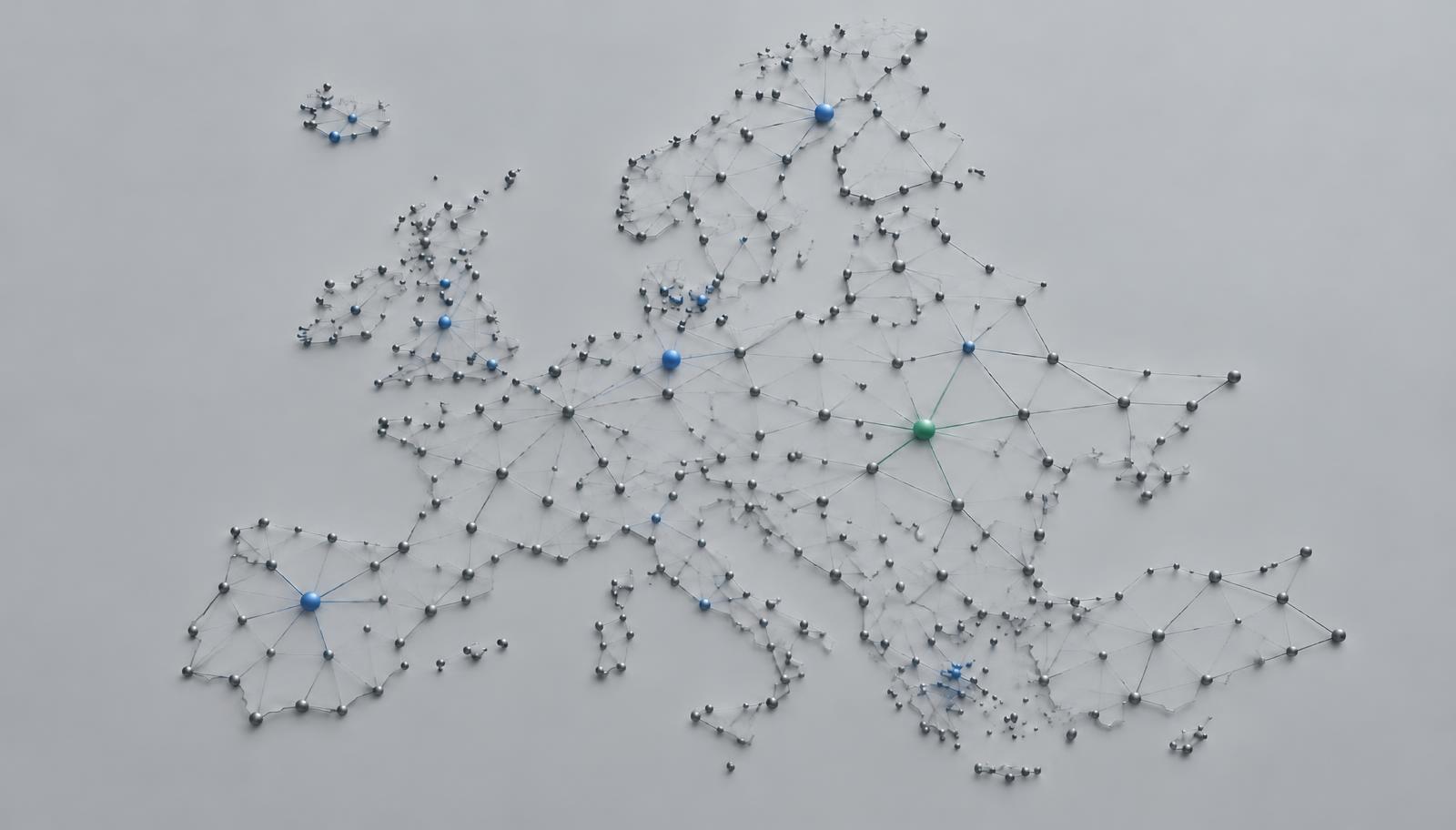
The well-known AI models such as ChatGPT, Claude or DeepSeek all come from the US or the People's Republic of China. Yet companies in Europe are active in artificial intelligence (AI) as well – and one of the most successful is often overlooked.
Europe has by now produced a remarkable range of its own AI language models. They differ considerably, though: some compete with the big international general-purpose models, others focus on specific functions.
General-purpose AI
When it comes to artificial intelligence, most people think of the big general-purpose models. In Europe there are indeed only a few providers here.
Mistral: The best-known provider
Essentially, there is only one relevant provider in Europe: the French company Mistral AI.
Mistral groups its models into four classes by capability: Large, Medium, Small and Ministral. Mistral Large is the most powerful product for many applications, while Medium is designed primarily for agentic work. The smaller Ministral models are particularly suited to applications where compute and operating costs matter. In addition, there are specialized models.
Interesting for businesses: several models are available with open weights and, subject to their licence terms, can be run on infrastructure of your choice.
Find out more about Mistral's pricing in our AI model price comparison.
Aleph Alpha: Focus on business-critical applications
On 3 October 2026, Aleph Alpha released its new model Kolibri. It is initially available in German and English. According to the company, almost a quarter of the training data is in German.
The target group is not primarily private users, however, but companies and public authorities looking for AI for business-critical applications. Companies can also run the software on their own infrastructure.
Specialized AI applications
The picture is different for specialized AI applications. One German company in this field is even among the world's best.
axite: AI for text production
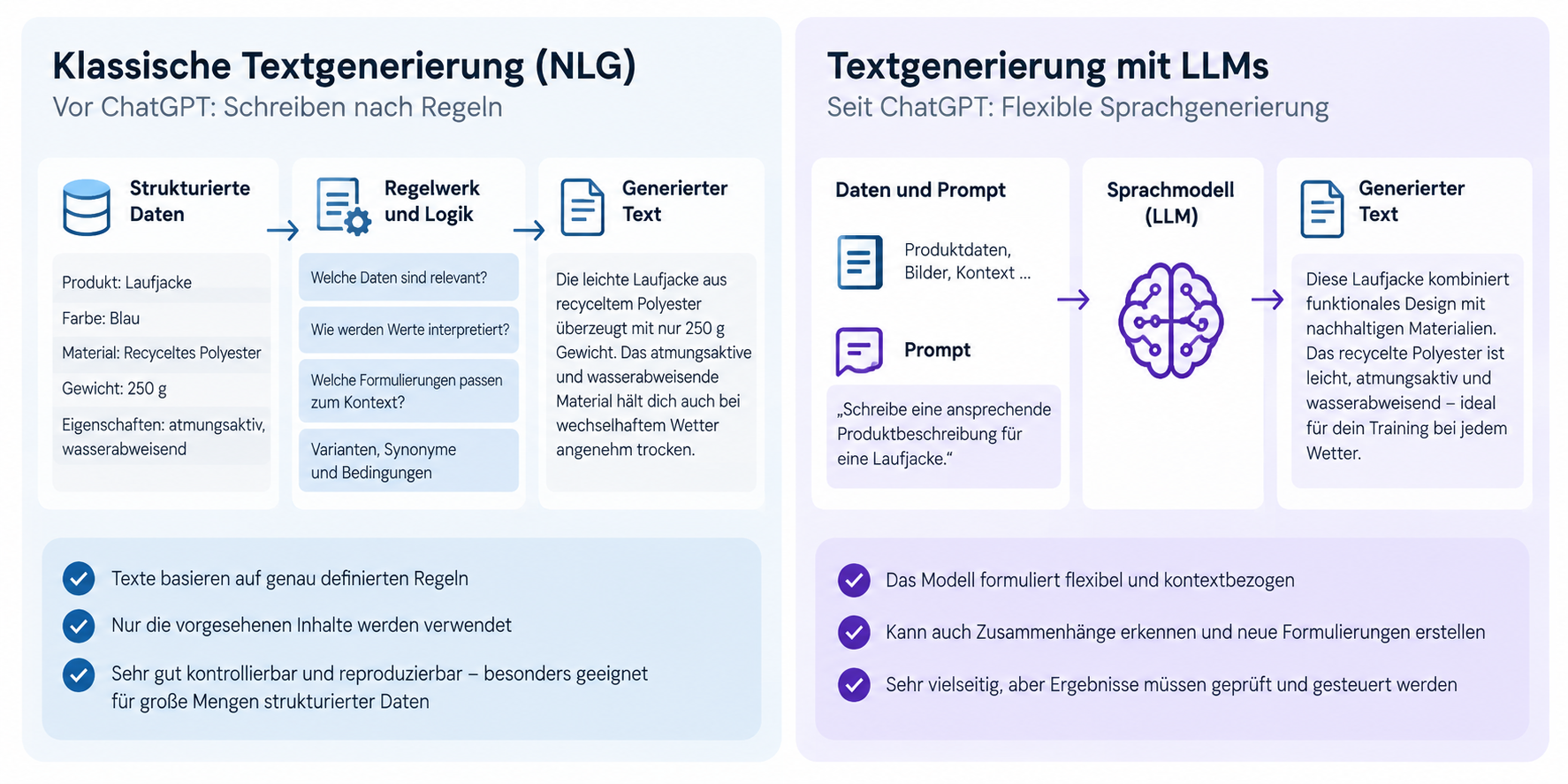
This German AI company has existed for 25 years. Back then, the Stuttgart team did not work with LLMs but with rule-based AI. The goal – then as now – is generating texts from data.
With axite, for example, thousands of product descriptions can be generated from product data. Unlike in-house solutions where content is written based on prompts, axite users define the intended effect of the product. The software also checks and optimizes the result on its own.
uNaice GmbH is a sales partner of axite. If you are interested in using the product, read more on our axite product page or talk to us directly.
DeepL: Translation software from Cologne
Many people know and use DeepL. No wonder: the Cologne-based company is one of the leaders in online translation.
Even though many don't associate it with AI, the translation service – like LLMs – is based on neural networks and is generally counted as artificial intelligence.
AI models from universities and institutes
Besides commercial companies, there are a number of research projects in Europe developing their own AI models. These are by no means theoretical gimmicks – they are built for business use, too.
Teuken 7B: The language prodigy
Developed in the OpenGPT-X research project, Teuken 7B was trained from the outset on all 24 official languages of the European Union.
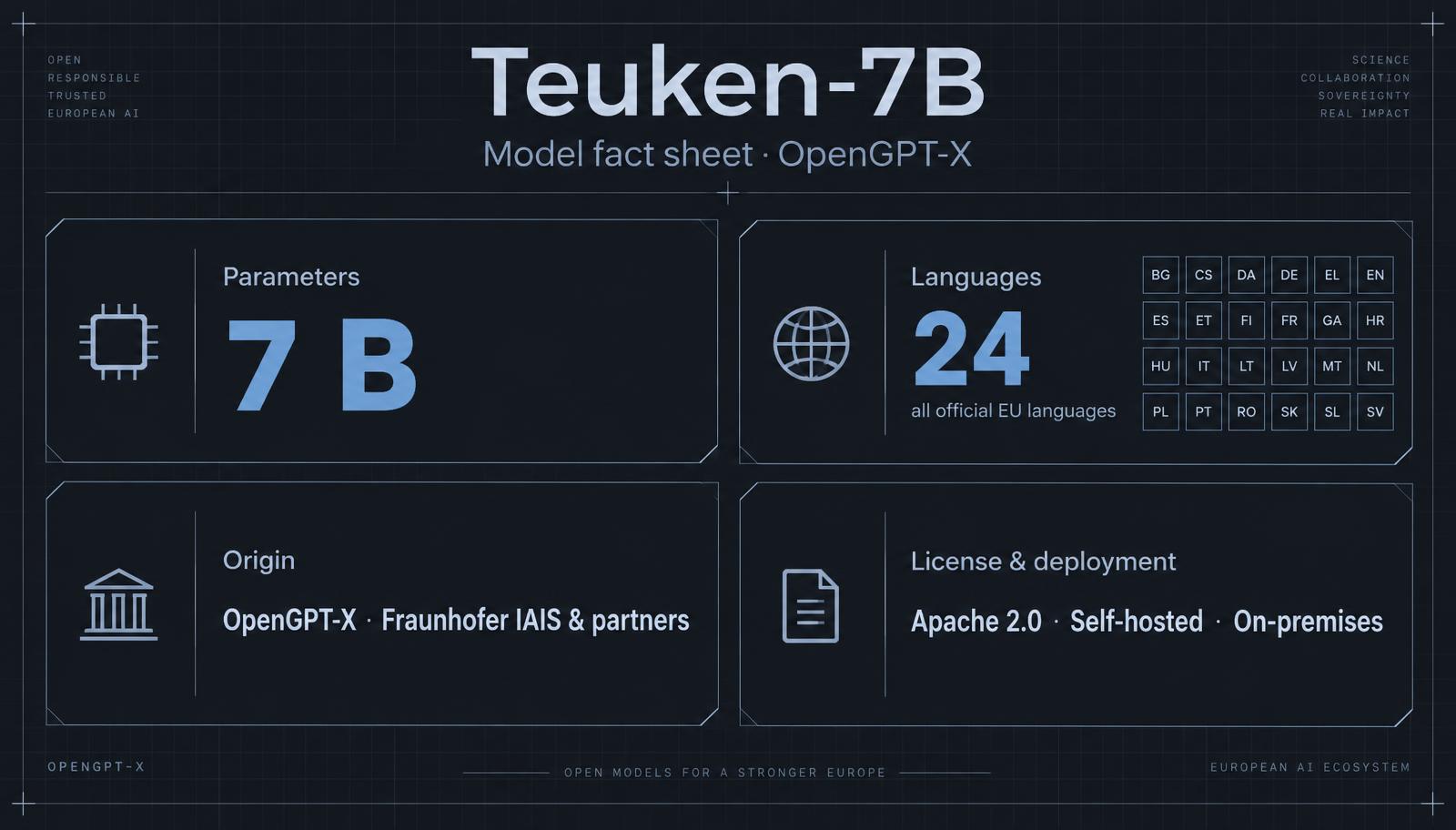
This makes it a good starting point for multilingual business applications, for example document processing, information extraction or text generation.
The commercially usable version under Apache 2.0 is particularly interesting. Companies can download the model, run it themselves and adapt it to specific tasks. However, not all published Teuken versions are cleared for commercial use.
OpenEuroLLM: A pan-European research alliance
EuroLLM is another model family with a special focus on European multilingualism. It includes EuroLLM-9B and EuroLLM-22B, among others.
The models were developed to process numerous languages, including all official EU languages. Possible applications include summaries, question answering, translation and multilingual content applications.
EuroLLM shows that European AI development is not just about replicating the largest possible English-language chatbots.
Apertus: Switzerland's language model
Apertus is considered Switzerland's first large language model. It was developed with Swiss research institutions such as ETH Zurich, EPFL Lausanne and the Swiss National Supercomputing Centre (CSCS).
The model family follows an open approach and aims to give research, businesses and public institutions a transparent basis for their own AI applications.
For companies, such models are particularly interesting when they want more control over the technical infrastructure and behaviour of their AI applications.
Which European model suits your business?
A blanket recommendation would make little sense. Anyone needing complex analyses and versatile AI applications should evaluate different models than a company that regularly produces multilingual product texts or extracts information from documents.
The terms of use matter just as much: open model weights do not automatically mean a model may be used commercially without restriction.
So the selection depends not only on origin and capability, but also on licence, hosting options, operating costs and quality on the tasks you actually need. You'll find an overview of performance and costs on our AI models page.
Asking for the right model isn't always the point, though. Sometimes it's better to buy the finished solution right away instead of improvising. If you want to structure data, for example, you often don't need ChatGPT or Claude but a product like our DataNaicer. And nobody needs to build a sales lead generation system themselves – our Lead Stream does exactly that.
