%20--%3e%3cdefs%3e%3cstyle%3e%20.st0%20{%20fill:%20%23a5d028;%20}%20.st1%20{%20fill:%20%23fff;%20}%20.st2%20{%20fill:%20%231de2db;%20}%20.st3%20{%20fill:%20%2341bdf9;%20}%20%3c/style%3e%3c/defs%3e%3cg%20id='logo-unaice-line'%3e%3cpath%20class='st1'%20d='M143.3,36.1c-1.2,0-2.1-.9-2.1-2.1V12.2c0-1.2.9-2.1,2.1-2.1s2.1.9,2.1,2.1v21.8c0,1.2-.9,2.1-2.1,2.1ZM143.2,6.2c-1.3,0-2.4-1-2.4-2.4v-.8c0-1.3,1-2.4,2.4-2.4s2.4,1.1,2.4,2.4v.8c0,1.3-1.1,2.4-2.4,2.4Z'/%3e%3cpath%20class='st3'%20d='M23.7,36.1H2c-.5,0-1-.4-1-1V2.3c0-.5.4-1,1-1h21.7c.5,0,1,.4,1,1v32.9c0,.5-.4,1-1,1'/%3e%3cpath%20class='st2'%20d='M41.8,36.1h-14.4c-.5,0-1-.4-1-1v-14.5c0-.5.4-1,1-1h14.4c.5,0,1,.4,1,1v14.5c0,.5-.4,1-1,1'/%3e%3cpath%20class='st0'%20d='M41.8,17.9h-14.4c-.5,0-1-.4-1-1V2.2c0-.5.4-1,1-1h14.4c.5,0,1,.4,1,1v14.7c0,.5-.4,1-1,1'/%3e%3c/g%3e%3cpath%20class='st1'%20d='M196.4,29.2c-2.1,2.1-3.6,3.2-7.1,3.2s-7.4-2.3-8.2-7.4h16.7c2.7,0,2.9-1.9,2.7-4-.7-6.2-5.3-11.2-11.6-11.2s-12.3,5.1-12.3,13.4,5.4,13.3,12.6,13.3,8.3-2.6,10-4.3c1.8-2.1-1.2-4.7-2.8-3ZM188.9,13.7c4.7,0,7.3,4.1,7.6,7.3h-15.3c.7-4.3,3.4-7.3,7.7-7.3Z'/%3e%3cpath%20class='st1'%20d='M132.1,12.9c-1.9-1.9-5.4-2.9-8.2-2.9s-5.3.5-8.2,1.8c-2.4,1-.9,5,1.6,3.7,2.1-1,3.3-1.5,6.3-1.5s6.7,1.1,6.8,6.1c-1.8-.5-2.7-.8-6.9-.8-6.8,0-11.3,3.3-11.3,8.8s4.1,8.4,10.1,8.4,5.4-.6,8.3-2.9v.5c0,2.8,4.2,2.6,4.2,0v-13.8c0-3.1-.8-5.5-2.7-7.4ZM130.4,26.2c0,3.6-3.4,6.3-8,6.3s-5.9-1.7-5.9-4.6,2.5-4.6,6.8-4.6c0,0,4.8,0,7.1,1v1.9Z'/%3e%3cpath%20class='st1'%20d='M80,36.1c-1.2,0-2.1-.9-2.1-2.1V3.4c0-1.2,1-2.2,2.2-2.2h.4c.8,0,1.4.4,2,1.1l20.2,25.7V3.4c0-1.2.9-2.1,2.1-2.1s2.1.9,2.1,2.1v30.7c0,1.1-.5,2-1.9,2s-1.9-.8-2.2-1.2l-20.7-26.2v25.3c0,1.2-.9,2.1-2.1,2.1Z'/%3e%3cpath%20class='st1'%20d='M60.2,36.5c-5.1,0-10.5-4.3-10.5-10.7v-13.5c0-1.2.9-2.1,2.1-2.1s2.1.9,2.1,2.1v13.1c0,4.5,2.5,7.1,6.6,7.1s7.3-3.2,7.3-7.5v-12.7c0-1.2.9-2.1,2.1-2.1s2.1.9,2.1,2.1v21.8c0,2.8-4.2,2.7-4.2,0v-.5c-1.5,1.6-3.3,2.9-7.6,2.9Z'/%3e%3cpath%20class='st1'%20d='M163.8,36.5c-7.1,0-13.1-6-13.1-13.3s4.8-13.5,13.5-13.5c4.4,0,6.9,2,8.8,3.7,1.8,1.5-.8,5.1-2.8,3.3-.8-.8-3.3-3-6.4-3-4.8,0-8.6,4-8.6,9.2s3.8,9.3,8.6,9.4c3.7,0,4.9-1,7-3.1,1.6-1.8,4.6,1,3,2.8-3,3-5.7,4.5-10,4.5h0Z'/%3e%3c/svg%3e)
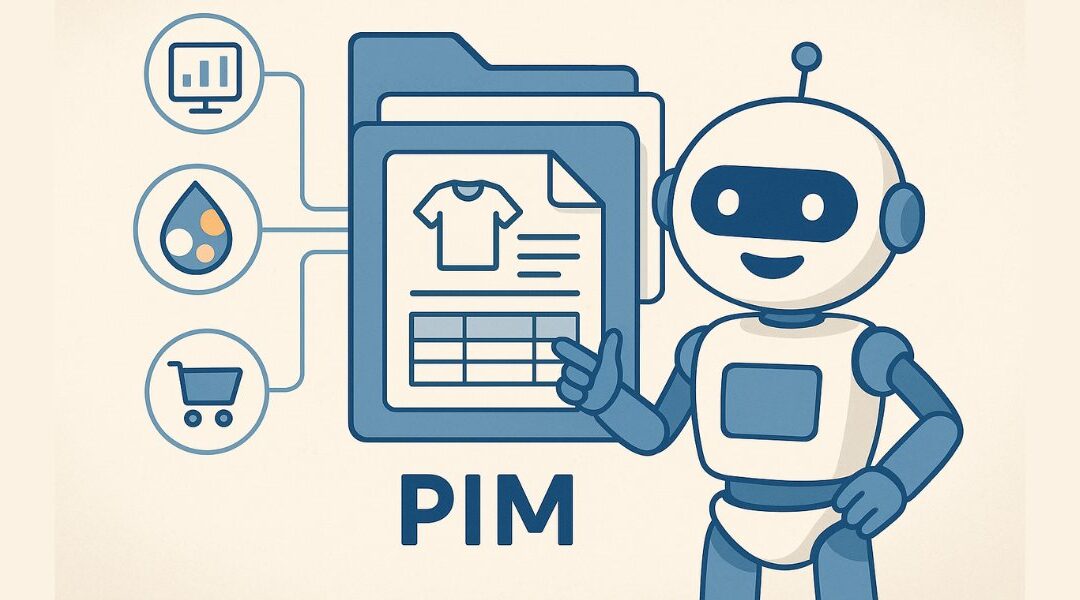
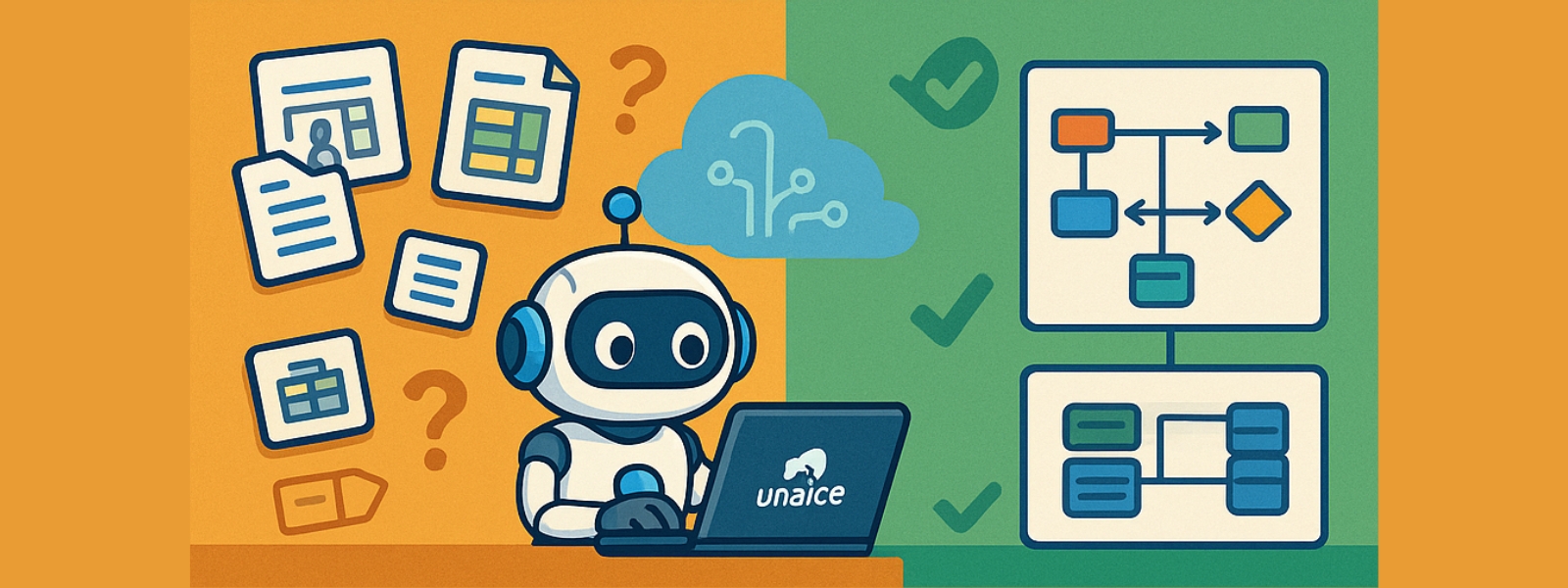
Anyone who sells products online cannot ignore the topic of PIM. A product information management system (PIM) helps companies efficiently manage, maintain, and centrally provide large amounts of product information. According to the free encyclopedia Wikipedia, product information management describes the basis for consistent data quality and smooth processes.
Without a suitable system, a patchwork of Excel lists, PDFs, and different data sources quickly emerges—and that slows down usage and optimization throughout the company.
What makes a PIM system
A modern system for product information management is more than just a database. It offers media-neutral management of all important details: from technical attributes to images to texts.
The Akeneo solution is a prime example of how product catalogs can be maintained, enriched, and made available across various channels. The key is a uniform basis: only when all data is maintained centrally can sales, marketing, and e-commerce use the same information.
Our guide to data preparation also highlights the importance of structured data in reducing sources of error.

Processes, management, and enrichment in detail
The benefits of a PIM become apparent in everyday use. Whether you're editing new articles, procuring data sheets, or planning campaigns, a central data source provides transparency.
The enrichment of product information is a particularly critical point. Here, the SDZeCOM solution shows how automation can achieve an enormous reduction in manual work. A PIM not only enables the management of data quality, but also its analysis and optimization.
For companies that want to ensure their data quality in the long term, uNaice offers DataNaicer, a program specifically tailored to the structuring of product information.
Advantages of PIM for the customer experience
A PIM system not only improves internal processes, but also external impact. Customers benefit from complete, consistent, and up-to-date information. Colors, dimensions, and technical details are presented clearly, which directly enhances the customer experience.
The PIM directory platform describes how the introduction of a PIM leads to a clear optimization of processes. Compliance also plays a role: uniform data facilitates compliance with legal requirements.
At uNaice, we have seen in projects that even small steps in data automation can have a big impact. One example is the definition and quality of product data, which is ensured by clear rules and intelligent systems.

Practical implementation: From selection to use
Selecting a suitable system is a crucial step. Companies need to consider which functions are required and whether the system can map their own data structure. Analyzing the existing data helps to make the right decision.
The Akeneo platform shows how to use a PIM step by step. First, product data is collected centrally, then enriched and distributed to various channels.
uNaice supports customers in implementing such projects. With tools such as DataNaicer, even large amounts of data can be reliably processed—for both PIM and e-commerce. You can find out more about data integration in our blog.

Product information as a strategic success factor
Many companies underestimate how important clean product information is for growth. Any missing or incorrect information has a direct impact on visibility in search engines and the customer experience.
A PIM ensures consistency here: all attributes—from size to color—are stored centrally and can be used for different product catalogs. Those who rely on a clear database lay the foundation for automation and better use of content.

PIM and the future of product management
A PIM is no longer just a technical solution. It changes the entire product management process and brings teams together. In a group consisting of marketing, IT, and sales, everyone works with the same data, which reduces misunderstandings and increases efficiency.
Centralized management is a real advantage, especially when it comes to the range of channels in which products need to be presented. This creates a uniform language across all platforms.
With the introduction of DataNaicer as an intelligent addition to PIM, companies are focusing on scalability. The combination of automatic enrichment and human validation creates the perfect balance.

PIM vs. MDM vs. ERP vs. DAM – clearing up the acronyms
Data management is full of buzzwords. Here is a clean separation:
| System | What it does | Typical use |
|---|---|---|
| PIM (Product Information Management) | bundles all marketing-relevant product data (attributes, descriptions, images, translations) | webshop, print, marketplaces, catalogs |
| MDM (Master Data Management) | manages all master data (products, customers, suppliers, locations) | cross-system across ERP/CRM/PIM |
| ERP (Enterprise Resource Planning) | runs operational processes like inventory, purchasing, accounting | full business operations |
| DAM (Digital Asset Management) | stores media assets (images, videos, PDFs) | marketing & brand management |
Key takeaway: A PIM does not replace ERP or DAM. It complements both and ensures product information is central, complete and channel-ready. A good PIM pulls master data from your ERP and images from your DAM and enriches both with editorial content.
Top PIM vendors 2026 compared
The PIM market in 2026 is diverse. A quick orientation across the most established vendors:
| Vendor | Model | Strength | Ideal for |
|---|---|---|---|
| Akeneo | open source + cloud | strong ecosystem, intuitive UI | mid-market, fast rollouts |
| Pimcore | open source | PIM + DAM + MDM + CDP in one | growing companies with multi-domain needs |
| Plytix | SaaS | affordable, easy | SMBs, startups |
| Contentserv | cloud | strong workflows, channel management | mid-market & enterprise |
| inriver | SaaS | marketplace integration | manufacturers, B2B distribution |
| Salsify | SaaS | e-commerce focus, syndication | brands with many marketplace channels |
| Stibo Systems | enterprise | multi-domain MDM/PIM | corporations, industrial |
Tip for selection: Don't get distracted by feature lists. What matters is how fast you reach real productivity – structured data live in your shop, marketplace or catalog. Run pilot projects with two vendors and compare the time to first live record.
When does a PIM system really pay off?
A PIM is not mandatory – but at a certain point it becomes essential. Clear indicators for the right moment:
If three or more of these apply, the investment in a PIM almost always pays off.
Rolling out a PIM – step by step
A PIM rollout is a strategic project, not just a tool purchase. This sequence minimizes risk:
Realistic timeline: pilot in 2–3 months, full operation in 6–12 months depending on complexity.
Manage technical product data efficiently
Technical product data (dimensions, materials, standards, compatibilities) is especially error-prone. The key levers:
This reduces manual maintenance effort by 40–70 % and improves consistency across all channels.
Conclusion: PIM as the basis for growth and efficiency
Providing consistent product data is not optional, but mandatory for modern companies. A PIM is a solid foundation for ensuring data quality, simplifying processes, and improving the customer experience.
If you are also looking for an intelligent solution for data enrichment, DataNaicer from uNaice is the ideal partner. This not only ensures the successful introduction of a PIM system, but also the long-term optimization of your entire data strategy.

FAQ on PIM systems & Product Information Management