%20--%3e%3cdefs%3e%3cstyle%3e%20.st0%20{%20fill:%20%23a5d028;%20}%20.st1%20{%20fill:%20%23fff;%20}%20.st2%20{%20fill:%20%231de2db;%20}%20.st3%20{%20fill:%20%2341bdf9;%20}%20%3c/style%3e%3c/defs%3e%3cg%20id='logo-unaice-line'%3e%3cpath%20class='st1'%20d='M143.3,36.1c-1.2,0-2.1-.9-2.1-2.1V12.2c0-1.2.9-2.1,2.1-2.1s2.1.9,2.1,2.1v21.8c0,1.2-.9,2.1-2.1,2.1ZM143.2,6.2c-1.3,0-2.4-1-2.4-2.4v-.8c0-1.3,1-2.4,2.4-2.4s2.4,1.1,2.4,2.4v.8c0,1.3-1.1,2.4-2.4,2.4Z'/%3e%3cpath%20class='st3'%20d='M23.7,36.1H2c-.5,0-1-.4-1-1V2.3c0-.5.4-1,1-1h21.7c.5,0,1,.4,1,1v32.9c0,.5-.4,1-1,1'/%3e%3cpath%20class='st2'%20d='M41.8,36.1h-14.4c-.5,0-1-.4-1-1v-14.5c0-.5.4-1,1-1h14.4c.5,0,1,.4,1,1v14.5c0,.5-.4,1-1,1'/%3e%3cpath%20class='st0'%20d='M41.8,17.9h-14.4c-.5,0-1-.4-1-1V2.2c0-.5.4-1,1-1h14.4c.5,0,1,.4,1,1v14.7c0,.5-.4,1-1,1'/%3e%3c/g%3e%3cpath%20class='st1'%20d='M196.4,29.2c-2.1,2.1-3.6,3.2-7.1,3.2s-7.4-2.3-8.2-7.4h16.7c2.7,0,2.9-1.9,2.7-4-.7-6.2-5.3-11.2-11.6-11.2s-12.3,5.1-12.3,13.4,5.4,13.3,12.6,13.3,8.3-2.6,10-4.3c1.8-2.1-1.2-4.7-2.8-3ZM188.9,13.7c4.7,0,7.3,4.1,7.6,7.3h-15.3c.7-4.3,3.4-7.3,7.7-7.3Z'/%3e%3cpath%20class='st1'%20d='M132.1,12.9c-1.9-1.9-5.4-2.9-8.2-2.9s-5.3.5-8.2,1.8c-2.4,1-.9,5,1.6,3.7,2.1-1,3.3-1.5,6.3-1.5s6.7,1.1,6.8,6.1c-1.8-.5-2.7-.8-6.9-.8-6.8,0-11.3,3.3-11.3,8.8s4.1,8.4,10.1,8.4,5.4-.6,8.3-2.9v.5c0,2.8,4.2,2.6,4.2,0v-13.8c0-3.1-.8-5.5-2.7-7.4ZM130.4,26.2c0,3.6-3.4,6.3-8,6.3s-5.9-1.7-5.9-4.6,2.5-4.6,6.8-4.6c0,0,4.8,0,7.1,1v1.9Z'/%3e%3cpath%20class='st1'%20d='M80,36.1c-1.2,0-2.1-.9-2.1-2.1V3.4c0-1.2,1-2.2,2.2-2.2h.4c.8,0,1.4.4,2,1.1l20.2,25.7V3.4c0-1.2.9-2.1,2.1-2.1s2.1.9,2.1,2.1v30.7c0,1.1-.5,2-1.9,2s-1.9-.8-2.2-1.2l-20.7-26.2v25.3c0,1.2-.9,2.1-2.1,2.1Z'/%3e%3cpath%20class='st1'%20d='M60.2,36.5c-5.1,0-10.5-4.3-10.5-10.7v-13.5c0-1.2.9-2.1,2.1-2.1s2.1.9,2.1,2.1v13.1c0,4.5,2.5,7.1,6.6,7.1s7.3-3.2,7.3-7.5v-12.7c0-1.2.9-2.1,2.1-2.1s2.1.9,2.1,2.1v21.8c0,2.8-4.2,2.7-4.2,0v-.5c-1.5,1.6-3.3,2.9-7.6,2.9Z'/%3e%3cpath%20class='st1'%20d='M163.8,36.5c-7.1,0-13.1-6-13.1-13.3s4.8-13.5,13.5-13.5c4.4,0,6.9,2,8.8,3.7,1.8,1.5-.8,5.1-2.8,3.3-.8-.8-3.3-3-6.4-3-4.8,0-8.6,4-8.6,9.2s3.8,9.3,8.6,9.4c3.7,0,4.9-1,7-3.1,1.6-1.8,4.6,1,3,2.8-3,3-5.7,4.5-10,4.5h0Z'/%3e%3c/svg%3e)
We all know the problem: whether you earn your money in e-commerce, corporate communications, reporting, marketing, or journalism, the success of companies increasingly depends on high-quality content that is as relevant as possible to the lives of their customers. A Text Robot can provide valuable support in creating affordable, high-quality text.
Some turn to text agencies to obtain affordable SEO text, others have their own content editors for text creation, or product managers write product descriptions themselves in online shops, etc.
Then someone in Silicon Valley invents a new product category, and within a few months, tens of thousands of products need to be written about—for example, wearables.
The 3 scenarios for copywriting
At uNaice, we distinguish between the following three areas of application:
The common features of these three areas of application that make them so interesting for cost-effective content creation are:
The starting point for high-quality text automation: structured data
For every type of text, structured data is usually available in the form of tables, databases, or lists. We evaluate this data in an initial analysis and use it to determine the Text Robot's potential for content production.
What does a Text Robot do?
If we take the robot definition of the Robotic Industries Association as a basis, we can say:
"A Text Robot is a programmable, multi-purpose software for creating texts based on structured data. The freely programmable interpretation of structured data makes it suitable for a wide variety of writing tasks."
Admittedly, that sounds a little complicated.
To put it more simply:
A Text Robot can be trained to use data found in Excel* spreadsheets, product data sheets, or databases to produce text that is easier for humans to read.
Our Text Robot can generate content in over 100 different languages. It doesn't just translate automatically, but creates each text individually according to a set of rules previously defined by native speakers. This is the only way to ensure that the typical tone of the country is reflected and that the customer is addressed in the desired manner. This approach virtually eliminates typical translation errors or irritating word choices.
Are Text Robots really that good yet?
Do you play chess? Then it is very likely that you have been beaten by a chess computer at some point. It took until 1996 for a computer to be able to play chess better than the best human player. That was IBM's Deep Blue, which defeated Garry Kasparov.
In March 2016, something that had previously been considered impossible happened: a computer beat the world champion in the even more complex game *Go*, Lee Sedol, 3:0.
And Text Robots?
They are already starting to perform better than human partners in their fields: A study of 1,024 people revealed that participants found articles on sports and finance topics to be more objective and comprehensible when they were written by a Text Robot.
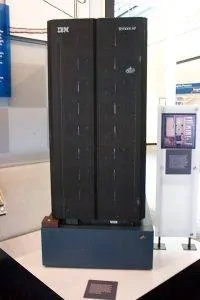
Deep Blue by James the photographer – CC BY 2.0
How does the Text Robot know what to write?
Training and programming. At uNaice, we call this onboarding and Service Creation.
First, our experts look at the customer's database. From this, they determine how many data records are suitable for text generation and assess the quality that can be achieved with the texts. If necessary, the source data is reworked and then the Text Robot is programmed.
Onboarding
This step of the onboarding process can be thought of as the creation of a set of rules according to which the Text Robot will later record the data and convert it into human language. The result is data-based text such as product descriptions in main clause, subordinate clause format. With the help of the onboarding, all suitable data records in the data pool can receive their own copies.
Service Creation
The following Service Creation goes into depth. Here, the products, data records, and categories are localized for which targeted, more extensive text generation achieves higher added value. Extended text can achieve the following results, for example:
Enrichment with secondary data
The results become particularly interesting when the client's input data is enriched with secondary data:
Imagine you sell wine and have an Excel spreadsheet with 50,000 different types of wine. Let's take the data VINTAGE and GROWING_REGION. The Text Robot can now also access weather data for the corresponding year in the wine-growing region and use this information to automatically enrich the description of the wine and provide valuable additional information for future wine lovers without any extra effort.
What is the difference between a Text Robot and a chatbot?
Chatbots are software robots that communicate with users via SMS, Facebook Messenger, WhatsApp, or chat windows on websites.
The task here is different, and Text Robots and chatbots should not be confused. Chatbots respond to short text messages and provide answers tailored to the current conversation partner. You can find some examples of this in the article Futures of Text.
The capabilities of our Text Robot go far beyond the short dialogue communication of such chatbots: For the Text Robot, a set of rules for text generation is first created by humans, which perfectly matches the tone of the operator and is optimized by our experts to address different buyer personas. The Text Robot receives a selection of variables to enable it to compose unique texts and variants of expressions that make the copies interesting and varied.
The text structure configuration allows, for example, for sentence lengths that can be adapted to target reader groups as well as to any number of output devices. Text on computer displays can be relatively long and also go into less relevant details. In contrast, text on smartphones with smaller displays must be shorter and more condensed so that readers do not tire and can quickly grasp the most important details. Prioritizing such features is just as much a part of configuring the Text Robot as creating sentence variants, synonym containers, and weaving secondary data into the appropriate context.
Configured in this way, the Text Robot can be used to create extensive and complex text that can be transformed into any number of unique variants at the touch of a button, as well as individual text sections and even dialogue text.
Outlook for the future
It is almost a little presumptuous to venture a look into the crystal ball when it comes to an absolute technology of the future, but when mentioning chatbots in particular, one thing is clear:
These two systems could work together excellently in the future.
A chatbot accepts a human request, passes the relevant information on to a Text Robot, which formulates a helpful answer from various data sources, and the chatbot returns it to the questioner.
What humans can still do better
You're probably thinking, "But we can't make ourselves completely dependent on machines!"
We don't do that either. There are still areas where humans are superior to automatic text generators, such as understanding irony and sarcasm or making emotional judgments.
But:
The Text Robot is trained by humans and can therefore interpret certain triggers in the input data and respond to them with emotionally charged, individual text, thus appealing to the emotions of the target groups through human language in the output.
Conclusion: Text Robots do not take away people's jobs – on the contrary!
As in the industrial revolution, robots take on the work that humans cannot do due to a lack of manpower, or which tends to lead to boredom and error-prone behavior in humans due to its monotony. Robots do not get bored and maintain their high quality of work 24 hours a day, 365 days a year.
Robots are, if you will, a modern and highly specialized version of the steam engine. Whether it's a relatively simple industrial robot that performs repetitive tasks or an autonomous car that has to record and evaluate millions of sensor messages from GPS data, traffic rules, road conditions, engine data, etc., and convert them into safe driving:
Almost every invention made by humankind to date has been aimed at saving us strength and energy, making work easier or eliminating it altogether so that we can focus on the next important task.
Text Robots ensure speed and high quality for recurring writing tasks. They significantly reduce the need for human resources. This frees up valuable time and capacity for people to focus on strategy, creativity, and thinking.
Further articles on the Text Robot: