%20--%3e%3cdefs%3e%3cstyle%3e%20.st0%20{%20fill:%20%23a5d028;%20}%20.st1%20{%20fill:%20%23fff;%20}%20.st2%20{%20fill:%20%231de2db;%20}%20.st3%20{%20fill:%20%2341bdf9;%20}%20%3c/style%3e%3c/defs%3e%3cg%20id='logo-unaice-line'%3e%3cpath%20class='st1'%20d='M143.3,36.1c-1.2,0-2.1-.9-2.1-2.1V12.2c0-1.2.9-2.1,2.1-2.1s2.1.9,2.1,2.1v21.8c0,1.2-.9,2.1-2.1,2.1ZM143.2,6.2c-1.3,0-2.4-1-2.4-2.4v-.8c0-1.3,1-2.4,2.4-2.4s2.4,1.1,2.4,2.4v.8c0,1.3-1.1,2.4-2.4,2.4Z'/%3e%3cpath%20class='st3'%20d='M23.7,36.1H2c-.5,0-1-.4-1-1V2.3c0-.5.4-1,1-1h21.7c.5,0,1,.4,1,1v32.9c0,.5-.4,1-1,1'/%3e%3cpath%20class='st2'%20d='M41.8,36.1h-14.4c-.5,0-1-.4-1-1v-14.5c0-.5.4-1,1-1h14.4c.5,0,1,.4,1,1v14.5c0,.5-.4,1-1,1'/%3e%3cpath%20class='st0'%20d='M41.8,17.9h-14.4c-.5,0-1-.4-1-1V2.2c0-.5.4-1,1-1h14.4c.5,0,1,.4,1,1v14.7c0,.5-.4,1-1,1'/%3e%3c/g%3e%3cpath%20class='st1'%20d='M196.4,29.2c-2.1,2.1-3.6,3.2-7.1,3.2s-7.4-2.3-8.2-7.4h16.7c2.7,0,2.9-1.9,2.7-4-.7-6.2-5.3-11.2-11.6-11.2s-12.3,5.1-12.3,13.4,5.4,13.3,12.6,13.3,8.3-2.6,10-4.3c1.8-2.1-1.2-4.7-2.8-3ZM188.9,13.7c4.7,0,7.3,4.1,7.6,7.3h-15.3c.7-4.3,3.4-7.3,7.7-7.3Z'/%3e%3cpath%20class='st1'%20d='M132.1,12.9c-1.9-1.9-5.4-2.9-8.2-2.9s-5.3.5-8.2,1.8c-2.4,1-.9,5,1.6,3.7,2.1-1,3.3-1.5,6.3-1.5s6.7,1.1,6.8,6.1c-1.8-.5-2.7-.8-6.9-.8-6.8,0-11.3,3.3-11.3,8.8s4.1,8.4,10.1,8.4,5.4-.6,8.3-2.9v.5c0,2.8,4.2,2.6,4.2,0v-13.8c0-3.1-.8-5.5-2.7-7.4ZM130.4,26.2c0,3.6-3.4,6.3-8,6.3s-5.9-1.7-5.9-4.6,2.5-4.6,6.8-4.6c0,0,4.8,0,7.1,1v1.9Z'/%3e%3cpath%20class='st1'%20d='M80,36.1c-1.2,0-2.1-.9-2.1-2.1V3.4c0-1.2,1-2.2,2.2-2.2h.4c.8,0,1.4.4,2,1.1l20.2,25.7V3.4c0-1.2.9-2.1,2.1-2.1s2.1.9,2.1,2.1v30.7c0,1.1-.5,2-1.9,2s-1.9-.8-2.2-1.2l-20.7-26.2v25.3c0,1.2-.9,2.1-2.1,2.1Z'/%3e%3cpath%20class='st1'%20d='M60.2,36.5c-5.1,0-10.5-4.3-10.5-10.7v-13.5c0-1.2.9-2.1,2.1-2.1s2.1.9,2.1,2.1v13.1c0,4.5,2.5,7.1,6.6,7.1s7.3-3.2,7.3-7.5v-12.7c0-1.2.9-2.1,2.1-2.1s2.1.9,2.1,2.1v21.8c0,2.8-4.2,2.7-4.2,0v-.5c-1.5,1.6-3.3,2.9-7.6,2.9Z'/%3e%3cpath%20class='st1'%20d='M163.8,36.5c-7.1,0-13.1-6-13.1-13.3s4.8-13.5,13.5-13.5c4.4,0,6.9,2,8.8,3.7,1.8,1.5-.8,5.1-2.8,3.3-.8-.8-3.3-3-6.4-3-4.8,0-8.6,4-8.6,9.2s3.8,9.3,8.6,9.4c3.7,0,4.9-1,7-3.1,1.6-1.8,4.6,1,3,2.8-3,3-5.7,4.5-10,4.5h0Z'/%3e%3c/svg%3e)
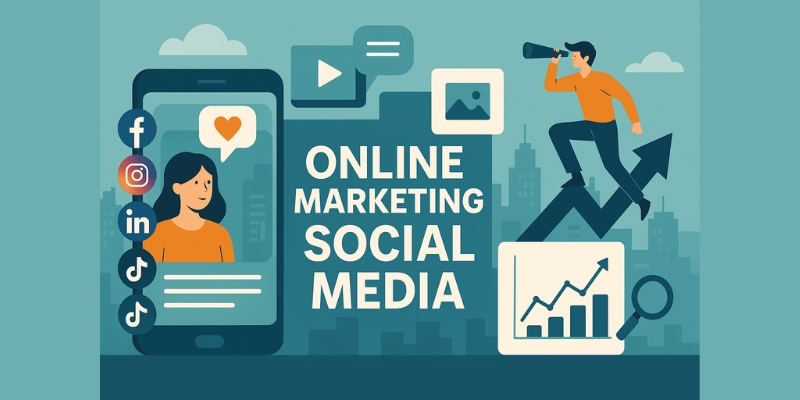
Social Media Online Marketing is no longer a side issue—it is a central element of digital marketing. If you want your company to be visible today, there's no getting around social networks. Platforms such as Instagram, Facebook, LinkedIn, and TikTok offer a unique opportunity to connect directly with users, reach them on an emotional level, and accompany them throughout the entire customer journey.
Whether through posts, stories, influencer marketing, or targeted ads: The right strategy determines success or failure. That's why it takes more than just spontaneous posts—it takes content with structure, clear goals, and analysis that shows what works. In this article, we'll look at how you can use social media professionally and which tools can help you work more efficiently and communicate more successfully.
One particularly exciting approach is data-driven implementation—for example, with News Stream, which automatically creates high-performance content that not only improves your visibility but also contributes to conversion.
The definition of Social Media Marketing in the digital marketing mix
Social media as an umbrella term for modern communication
The term social media encompasses platforms where people share content, exchange ideas, and react in real time – a new form of digital communication based primarily on interaction, feedback, and sympathy. For companies, this is an enormous opportunity – but also a challenge. Because if you want reach, you have to get involved with algorithms, trends, and the attention of your target audience.
What exactly is Social Media Marketing?
According to the Aufgesang Online Marketing Glossary, Social Media Marketing is the targeted use of social media platforms to achieve marketing and communication goals. This includes building brand awareness, customer loyalty, lead generation, and improving service through direct exchange.
The various social media channels offer different strengths depending on the target group and objectives. While TikTok scores with emotional short videos, LinkedIn is particularly suitable for professional B2B communication. Despite many changes, Facebook remains a relevant channel, especially for local reach and older user groups.
Practical & strategic – why a clear plan is essential
Practical experience shows that working without a clear focus and defined goals wastes time and budget. Especially for smaller teams or solo self-employed people, it is important to concentrate on a platform that fits the brand and the market situation. The rule is: choose your channels carefully and align your strategy with your goals and target group.
A look at our article on social media agencies for solo entrepreneurs shows how even small businesses with limited resources can build visibility—with the right focus and data-driven content.
Choosing the right social media channels: Your roadmap to your target audience
Which channels really help your business move forward?
In today's online marketing mix, choosing the right social media channels is crucial to your success. Not every platform is suitable for every company, and not every target audience is equally active everywhere. This is exactly where it is decided whether your social media marketing remains just an expense—or generates real impact.
The various networks differ not only in their appearance and functionality, but also in their use, objectives, and communication style. While TikTok focuses on short videos with maximum entertainment value, LinkedIn is dominated by expert content with a high information content. Instagram, on the other hand, scores with visual inspiration and high interaction – ideal for lifestyle brands, creative industries, or events.
Social media is not one-size-fits-all – and that's a good thing
Social Media Marketing works best when you know where your target audience is and what kind of content they consume. If you run a B2B company, your strategy will probably focus on LinkedIn. For an online shop in the fashion or beauty sector, Instagram is essential. TikTok, on the other hand, is ideal for building visibility and brand loyalty among a young target group – with formats that not only inform but also evoke emotions.
The Social Media Academy also provides a useful overview of the impact and areas of application of these platforms. Here, not only are the platforms explained in detail, but practical insights into content formats and campaign development are also provided.
Targeted strategy instead of blind activism
Before you decide on one or more channels, you should clarify three things:
These questions determine how focused and efficient you can be in using your resources—whether you use your internal team or work with external partners. By the way, we show you how to get started on a platform like Facebook as an SME or solo entrepreneur in our article on Facebook marketing for entrepreneurs.
Don't forget community management and monitoring
An often underestimated aspect of social media marketing is ongoing monitoring and community management. A dedicated community manager is not only responsible for responding to comments, but also actively manages the dialogue, recognizes crises early on—such as impending shitstorms—and sustainably strengthens sympathy for your brand.
Monitoring tools and ongoing analysis of interactions also help you find out which content receives a particularly high number of likes, shares, or comments—and which strategies you should improve.
Think cross-media: How social media interacts with other channels
Your presence on social networks should not be viewed in isolation. A successful strategy links social media channels with other components of your marketing—e.g., your website, newsletter, YouTube, or even podcasts and TV commercials.
This creates a consistent communication landscape in which your target group can orient themselves along the customer journey – regardless of the channel. In terms of holistic corporate communication, this allows you to build trust and increase your reach organically.

Content Strategy and Influencer Marketing: success factors for your Social Media Marketing
Content is the Heart of your online communication
Without high-quality content, there can be no successful Social Media Marketing strategy. Content is what people see, like, share, and comment on in social networks. It is the digital voice of your brand and has a major influence on how your company is perceived.
But not all content is created equal. In a social media world dominated by algorithms, it's no longer enough to simply post beautiful pictures or inspiring quotes. Your content must be relevant, targeted, and, above all, strategically planned. What counts is not quantity, but relevance—both for the platform and for the target audience.
In this very practical article on social media campaigns, you will find examples of how companies structure their content and link it to measurable goals—a must-read for any modern marketing department.
What is a good content strategy?
A successful online marketing strategy is based on clear goals, a defined editorial plan, and an understanding of the target audience. You need answers to questions such as:
The focus is always on added value for the user. Well-performing content informs, entertains, or solves a specific problem. A well-positioned team for editorial planning, graphics, text, and analysis is a key success factor—alternatively, these tasks can also be automated by specialized agencies or smart tools.
Influencer Marketing: combining reach with authenticity
Influencer Marketing has long been an integral part of many brands' social media marketing – and with good reason. Authentic recommendations from credible voices create trust and increase interaction with the target group.
The trick is in choosing the right partners: micro-influencers with high credibility and community engagement often deliver better results than large accounts with millions of followers who have little connection to their fans. It's not just about reach, but about finding the right environment for your brand.
A real-life example: A regional organic start-up was able to double its sales in just four weeks by collaborating with a food influencer on Instagram – without a big budget, but with authentic storytelling and a genuine connection to the product.
In our article on LinkedIn Ads and content strategy, you will find more best practices on how to effectively use B2B influencers—especially if you have a product that requires explanation or want to convey expert knowledge.
Social media content in transition: articles and formats for more attention
In today's online world, you have to constantly evolve your content. What worked yesterday may be ineffective tomorrow. Trends change, platforms introduce new features—from reels to lives to interactive stories. As a company, you should remain flexible and regularly review your formats and content.
Are you afraid of not keeping up? Don't worry—News Stream helps you quickly create data-driven content that fits your brand, topics, and channel. Instead of posting blindly, you get structured, SEO-optimized content based on current trends that still fits your brand's tone.

Data-driven marketing and analysis: The path to greater efficiency in social media marketing
Why data-driven online marketing is indispensable today
In a world where millions of pieces of content are published every day, gut feeling is not enough in marketing. The use of data enables companies to communicate in a more targeted manner, respond more quickly, and tailor their channel mix precisely to their target audience. Those who base their strategy on sound analysis rather than pure trial and error not only save time but also increase the effectiveness of each individual measure.
In Social Media Marketing in particular, platforms such as Facebook, Instagram, and LinkedIn provide a wealth of metrics: reach, interactions, click rates, dwell time, and conversions—each number tells you something about the behavior of your target audience. If you interpret this data correctly, you can identify trends early on and continuously optimize your Social Media Marketing.
Tools & Technologies: leveraging opportunities for modern businesses
News Stream demonstrates how automated content creation based on current data works. Instead of laboriously developing content yourself, this solution allows you to generate content from news sources that are thematically relevant to your business – ready-made for SEO and social media.
This allows you to pick up on the latest industry trends and transfer them directly into posts for your channels—without having to spend time on extensive research every day. This saves resources, makes your team more efficient, and ensures maximum relevance. You can find out more in our article on the AI text generator test, which shows how artificial intelligence can be used effectively in marketing.
Analysis as a strategic tool in online marketing
The best Social Media Marketing strategies are based on a clear understanding of the current situation. Regular analysis of your campaigns not only shows you what is working well, but also what needs to be improved. Those who continuously review and optimize their strategies remain competitive in the long term.
Please note: Simply collecting data is not enough. It is important to interpret it in context. Why is interaction on Instagram declining? Why do reels perform better than carousels? Why do conversions increase when you address a specific topic? Answers to these questions will help you to continuously refine your online marketing funnel.
A good example from practice: A medium-sized company in the SaaS sector has recognized through systematic campaign analysis that content on “cybersecurity trends” performs particularly well. Since integrating this topic into their editorial plan, leads have increased by 28% – with the same budget.
Four practical examples from different industries demonstrate how powerful data-driven and strategic social media marketing can be. These include a company that uses News Stream to generate automated content from current topics—and has thus achieved significantly greater reach with the same amount of effort:
| Industry | Measure | Period | Result |
|---|---|---|---|
| B2C – organic startup | collaboration with food influencer | 4 weeks | +110% sales, +65% Instagram followers |
| B2B – SaaS company | data-driven topic planning in the editorial calendar | 6 months | +28% leads on the same budget |
| Retail – regional | local Facebook campaign & community building | 3 months | +320% reach, +75% engagement rate |
| Media/News – SME | automated social content via News Stream | 8 weeks | +210% content frequency, +47% reach with the same resources |
Promote opinion formation through data-driven content on your channel
The influence of data-based content on the opinion formation of your target group should not be underestimated. If you pick up on current developments, make well-founded statements, and share relevant content, you will become the voice of your industry—this strengthens your brand and brings you trust and authority in the long term.
Whether it's crisis communication planning, trend monitoring, or campaign planning, data-driven decisions are a must today. Those who rely on gut feeling will quickly fall behind the competition – especially in the fast-paced online world.
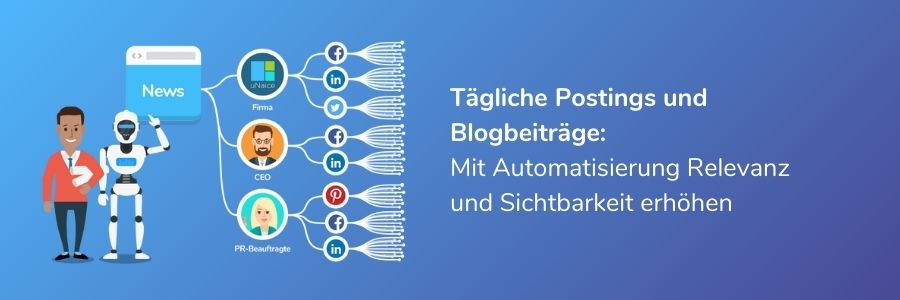
When the going gets tough: confidently mastering challenges and crises in Social Media Marketing
The downside of visibility on the social web
As effective as social media can be for your online marketing, it also carries risks. As soon as your company communicates publicly, you are also in the spotlight when things aren't going well. One careless post, one misunderstood message, or one inadequate response to criticism—and suddenly you're facing a shitstorm.
It is precisely in moments like these that the importance of strategic crisis management and good preparation becomes apparent. Those who have established clear rules and processes will not lose control—even when things need to happen quickly. And speed is often essential in the digital space.
Systematic community management: the art of responding confidently
Professional community management recognizes critical developments early on. It's not just about monitoring comments, but also about the tone and attitude of your company. With the right system, you can even score sympathy points in crisis situations – for example, through transparent communication, humor, or solution-oriented behavior.
It is important to have a robust emergency plan: Who is allowed to respond and how? Which topics are sensitive? What needs to be checked before publication? A clear internal structure helps your team remain capable of acting in a crisis – instead of being paralyzed by fear of doing something wrong.
News Stream: always prepared – even in an emergency
A tool like News Stream from uNaice is extremely helpful, especially when it comes to communicating on an equal footing. It automatically provides you with up-to-date, editorially reviewed content from relevant topics – a perfect basis for being present with facts, context, and topic-relevant contributions, even in critical situations.
By connecting directly to your CMS or social media tool, you can respond in real time—with professional content that informs, reassures, and builds trust. This is especially helpful when your internal team is short on time or overwhelmed in exceptional situations.
From problem to opportunity: Understanding crises as part of your brand
A well-resolved problem can even boost your brand in the long term. The way you deal with feedback shapes your image—not only among those directly affected, but also among all silent readers. In the digital public sphere, every reaction has an impact far beyond the original channel. That's why it's essential to show attitude, but also to respond to criticism.
The ability to communicate transparently, set clear rules, and provide informative content—all of this is part of a modern, resilient marketing strategy in the online age.
Conclusion: Use social media as a strategic topic and marketing tool
Social media has long been more than just a communication channel—it is a central tool in online marketing. With the right strategy, targeted content, and a clear focus on the use of your channels, you can not only build reach but also strengthen genuine relationships with your target audience.
Data-based tools such as News Stream show how modern companies optimize their processes and maintain an overview of their day-to-day business—even when things need to move quickly. The combination of current topics, editorial quality, and automated implementation gives you freedom and competitive advantages.
Social media allows you to reach your customers where they are active—in a way that is approachable, credible, and interactive. Now is the right time to rethink your strategy and take advantage of the opportunities offered by digital transformation.